Hydrangea Limetta: The Limegreen Hydrangea That Will Brighten Up Your Garden
Hydrangea Limetta: The LimeGreen Hydrangea That Will Brighten Up Your Garden
Hydrangea Limetta is a beautiful, lime-green hydrangea that is sure to brighten up your garden. It is a dwarf variety of the popular Annabelle hydrangea, but it has a number of advantages over its larger cousin. For one, Limetta is much more compact, reaching only 3-4 feet tall at maturity. This makes it ideal for smaller gardens or for planting in containers.
Another advantage of Limetta is its strong stems. The flowers of Annabelle hydrangeas can be quite heavy, and the stems of these plants are often not strong enough to support them. This can lead to the flowers drooping or even breaking off. Limetta, on the other hand, has strong stems that can easily support its weighty blooms.
In addition to its compact size and strong stems, Limetta also has beautiful lime-green flowers. These flowers start out a bright lime green in early summer, and then gradually fade to a softer green-white as the season progresses. The flowers are borne on large, rounded clusters that can reach up to 12 inches in diameter.
Limetta is a relatively easy plant to care for. It prefers full sun or partial shade, and it needs well-drained soil. It is also drought tolerant once it is established. Limetta does not require any special fertilizer or pruning, but it may benefit from a light application of fertilizer in the spring.
If you are looking for a beautiful, low-maintenance hydrangea that will add a touch of lime green to your garden, then Hydrangea Limetta is the perfect choice for you.
Here are some additional information about Hydrangea Limetta:
- Bloom time: Early summer to fall
- Hardiness zone: 3-9
- Size: 3-4 feet tall and wide
- Light requirements: Full sun to partial shade
- Soil requirements: Well-drained soil
- Water requirements: Moderate
- Fertilizer requirements: Light application of fertilizer in the spring
- Pruning requirements: Light pruning in the spring
- Pests and diseases: Susceptible to powdery mildew and leaf spot
How to care for Hydrangea Limetta:
- Plant Hydrangea Limetta in full sun or partial shade.
- Provide well-drained soil.
- Water regularly, especially during hot, dry weather.
- Fertilize lightly in the spring with a balanced fertilizer.
- Prune lightly in the spring to remove dead or damaged branches.
- Protect from powdery mildew and leaf spot with fungicide applications as needed.
Where to plant Hydrangea Limetta:
- Hydrangea Limetta can be planted in a variety of locations, but it does best in full sun or partial shade. It can be planted in a garden bed, in a container, or even in a hanging basket.
- If you are planting Hydrangea Limetta in a garden bed, choose a location that receives at least 6 hours of sunlight per day. The soil should be well-drained and rich in organic matter.
- If you are planting Hydrangea Limetta in a container, choose a container that is at least 18 inches in diameter. The container should have drainage holes in the bottom.
- If you are planting Hydrangea Limetta in a hanging basket, choose a basket that is at least 12 inches in diameter. The basket should have a liner and drainage holes in the bottom.
How to propagate Hydrangea Limetta:
- Hydrangea Limetta can be propagated by taking cuttings in the spring or summer.
- To take a cutting, choose a healthy branch that is about 6 inches long.
- Make a clean cut just below a node.
- Remove the lower leaves from the cutting.
- Dip the cutting in rooting hormone.
- Plant the cutting in a well-draining potting mix.
- Water the cutting well and place it in a warm, bright location.
- The cutting should root in about 4-6 weeks.
Conclusion
Hydrangea Limetta is a beautiful, low-maintenance hydrangea that is sure to brighten up your garden. It is a relatively easy plant to care for, and it can be planted in a variety of locations. If you are looking for a hydrangea that is different from the traditional white or pink varieties, then Hydrangea Limetta is the perfect choice for you.
If you're looking for a hydrangea that's both beautiful and low-maintenance, the Invincibelle Limetta is a great option. This dwarf hydrangea produces large, lime green flowers that bloom from early summer to fall. The flowers are so large that they can weigh down the branches, so it's important to plant the Invincibelle Limetta in an area that gets at least six hours of sunlight a day. This will help the stems grow strong enough to support the weight of the flowers.
The Invincibelle Limetta is also a very hardy plant. It can withstand cold winters and hot summers, and it's resistant to pests and diseases. If you're looking for a hydrangea that will add a touch of color and beauty to your landscape without requiring a lot of maintenance, the Invincibelle Limetta is a great choice.
To learn more about the Invincibelle Limetta, visit . This website has a wealth of information about the plant, including its care requirements, planting instructions, and pest and disease control tips. You can also find photos of the plant in bloom, so you can see for yourself how beautiful it is.
FAQ of hydrangea limetta
1. What is hydrangea limetta?
Hydrangea limetta is a type of hydrangea that is known for its lime-green flowers. It is a deciduous shrub that can grow up to 6 feet tall. Hydrangea limetta is native to China and Japan.
2. What are the care requirements for hydrangea limetta?
Hydrangea limetta is a relatively easy-care plant. It prefers full sun to partial shade and moist, well-drained soil. It is important to water hydrangea limetta regularly, especially during hot, dry weather. You should also fertilize it once a month during the growing season.
3. What are some common pests and diseases that affect hydrangea limetta?
The most common pests that affect hydrangea limetta are aphids, scale insects, and spider mites. These pests can be controlled with insecticidal soap or neem oil. Hydrangea limetta is also susceptible to a few diseases, such as leaf spot and powdery mildew. These diseases can be prevented by watering the plant at the base and avoiding overhead watering.
4. How do I deadhead hydrangea limetta?
Hydrangea limetta is a reblooming shrub, so it is important to deadhead it regularly to encourage new blooms. Deadheading is the process of removing spent blooms. You can deadhead hydrangea limetta by pinching off the spent blooms with your fingers or using a pair of sharp scissors.
5. How do I propagate hydrangea limetta?
Hydrangea limetta can be propagated by softwood cuttings or by division. Softwood cuttings are taken in the spring or summer from new growth. Division is done in the spring or fall by digging up the plant and dividing it into two or more sections.
Image of hydrangea limetta
5 different images of "hydrangea limetta" from Pinterest:
- A close-up of a single hydrangea limetta flower, showing its delicate white petals with a lime green center.

- A full-size hydrangea limetta bush, in full bloom. The flowers are a light lime green color, with a slight blush of pink on the edges.

- A hydrangea limetta bush in a garden setting. The bush is surrounded by other flowers, including roses and lilies.
- A hydrangea limetta flower arrangement. The flowers are arranged in a vase with other white flowers, such as hydrangeas and lilies.

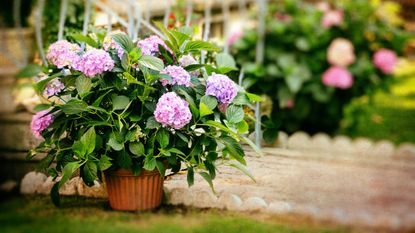
- A hydrangea limetta flower in a terracotta pot. The flower is placed on a windowsill, and the sunlight is shining through the petals, creating a beautiful effect.

Post a Comment for "Hydrangea Limetta: The Limegreen Hydrangea That Will Brighten Up Your Garden"